Informants, search warrants and drones make a great movie right? It’s all in a day’s work for our compliance and enforcement team.
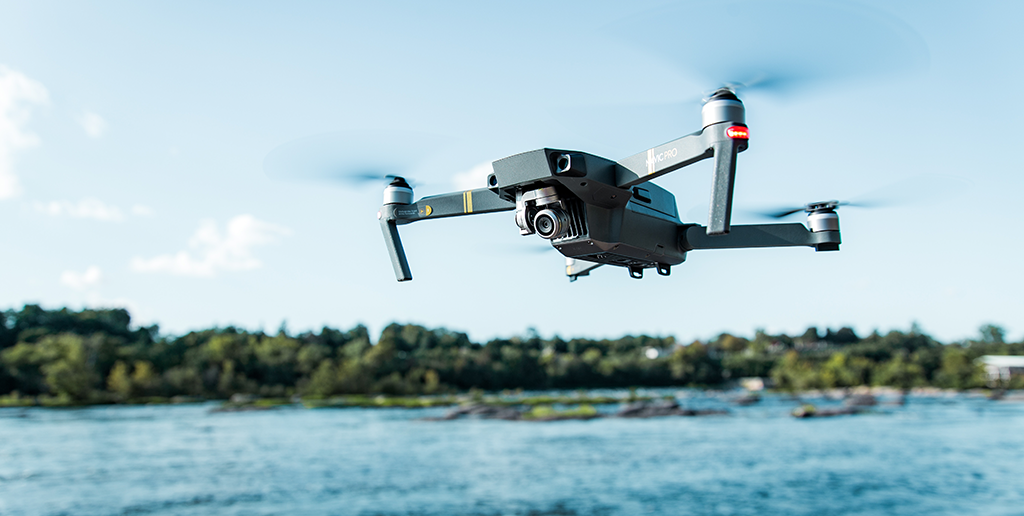
This month, in a Resource Management Act case we are prosecuting for Auckland Council, the Environment Court allowed evidence – including drone footage – to be used at an upcoming jury trial.
Judge Kirkpatrick, despite five separate allegations of unlawfulness raised by the defendant, found in the council’s favour – affirming its investigation practices and strengthening the council’s case.
Besides a fascinating factual backdrop, Auckland Council v Mawhinney conveniently summarises the key considerations when applying for search warrants. It also confronts the use of drones in RMA cases (in this case flown by a neighbour, completely independent of council) and provides some great take-home points for all enforcement officers.
The case
The defendant faced fourteen charges under the RMA. The charges related to what was alleged to be an unconsented cluster of buildings at a forestry block in West Auckland.
The council applied to the Court to introduce evidence at trial that was obtained using a search warrant, which the defendant opposed, arguing that the warrant and subsequent search were unlawful.
The defendant’s case was wide-ranging. He alleged the search warrant application contained insufficient information and material omissions that made it unlawful. He also said that because an informant (completely independent of the council) had trespassed on his property by flying a drone over it, leading to the council discovering the alleged breaches of the RMA, that the council’s case was tainted beyond repair.
Council officers were required to give evidence at the pre-trial hearing and showed great composure during cross examination.
The Judge’s decision
After considering all the evidence and legal submissions, the Judge concluded that none of the five grounds argued by the defendant made either the issuing of the search warrant or its execution unlawful. Therefore, the evidence obtained during the search was not improperly obtained and the Judge allowed it to be introduced at trial.
Why the decision is important for enforcement officers
Besides summarising the balancing exercise that a Court does when deciding whether evidence should be allowed to come in, the case offers a number take-home points for enforcement officers:
- A council simply has to have a reasonable basis to suspect an offence has been committed when applying for a search warrant under the Search and Surveillance Act 2012. It does not need to know that an offence has in fact been committed as that would defeat the whole purpose of the warrant.
- Council officers are of course authorised by s 332 of the RMA to go onto any property to determine whether or not the RMA or a rule of a plan is being complied with. However, there is a point when the purpose of the entry changes, which triggers the need for a search warrant. The determining factor is the underlying purpose for the visit.
- Execution of a search warrant by four enforcement officers, two dog control officers, a locksmith and two police officers is not unreasonable in certain circumstances (such as this one).
- It is not clear whether the taking of drone footage by a third party is a trespass but in this case Judge Kirkpatrick didn’t think it was.
The case will now go to trial and the defendant has elected to be tried by a jury.