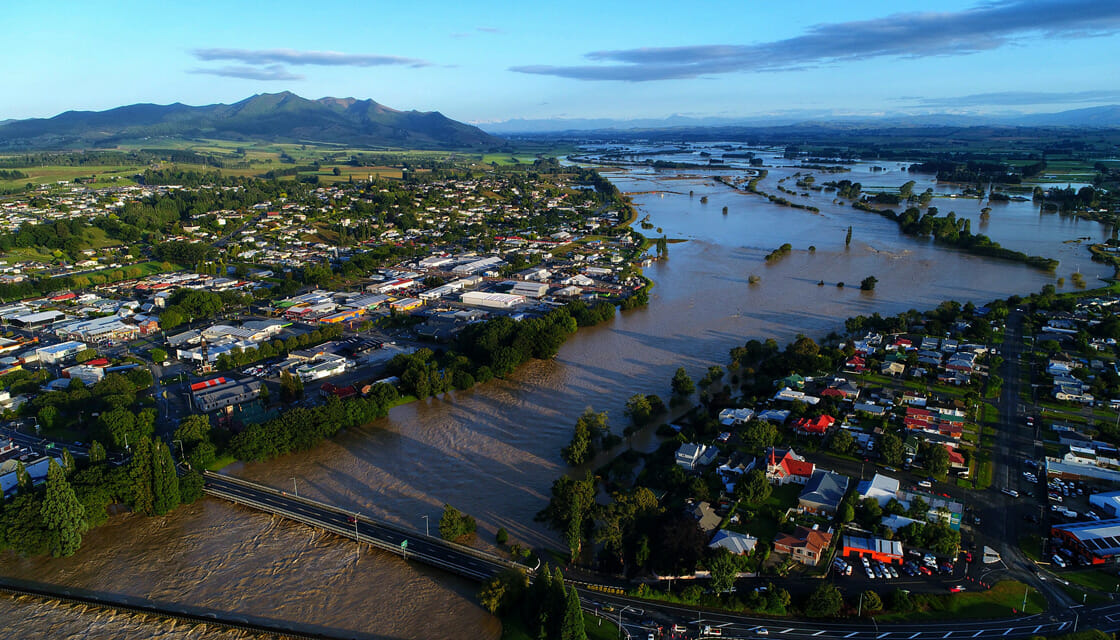
Flooding is one of the most common natural hazards in New Zealand. According to the Ministry for the Environment it is only likely to increase. Property owners and occupiers will usually have the benefit of insurance cover for flood events but this will not provide cover for certain damage which is explained below. Claims against councils will therefore continue to be brought and may increase given the climate change issues that New Zealand and the rest of the world is experiencing.
Most claims against councils for floods come from property owners as well as occupiers. Claims against councils usually fall into two types: nuisance and negligence. We briefly consider the general insurance position and these two types of claims below.
The insurance position
A standard home and contents policy will insure the owner of the policy for a natural disaster which causes damage to their property. “Property” will be narrowly defined to include the house (usually its foundations, structure and contents). There is, however, usually limited cover for other structures on the property such as retaining walls and landscaping.
Importantly a home and contents policy will not insure the owner of the policy for the land. That can come as a shock to many policy holders – and become a very litigious issue, as has been seen with the Christchurch earthquakes. Land is often the most expensive item to remediate in a flood event, requiring retaining of damaged land and further drainage solutions.
EQCover, the government arranged insurance, insures residential land against storm and flood damage where that property is also privately insured, and includes:
- land under the home and outbuildings (e.g. shed or garage);
- land within eight metres of the home and outbuildings; and
- land under or supporting the main access way, up to 60 metres from the home (not driveway surfacing).
This means that there could be a short fall in cover. For example, a non-supportive retaining wall, general landscaping and asphalt driveways are not covered by EQC in a flood event. There are also caps to this coverage which means that there may be a significant shortfall for the cost of the actual repairs needed.
Nuisance
A property owner or occupier can bring an action against a council in nuisance for a flooding event in certain circumstances. Nuisance is an “unreasonable interference with a person’s right to the use or enjoyment of an interest in land”. Nuisance can result in two types of loss: damage to property or personal discomfort.
For a claim in nuisance, there must be:
- a material damage to the claimant’s property; and/or
- a material interference with the claimant’s right to the enjoyment of their land causing personal discomfort.
To succeed in nuisance, a claimant must establish that the flooding was an unnatural flow of water onto the claimant’s land, and that the unnatural flow was caused by the action or inaction of the council. If the works by the council do not interfere with the natural water flow onto the claimant’s property, the council will not be liable.
Depending on the specific circumstances a council may be liable where the flood is as a result of some act or error which occurs on land which the council owns or controls. This can include acts or errors by the council’s contractors. It is easier for a claimant to prove a nuisance where there is continual flooding but one off escapes can also lead to liability for the council.
Remedies in nuisance include an injunction ordering the council to take a certain action to stop the flooding, and/or an award of damages to the claimant.
Negligence
If a council has breached its duty of care to the property owner or occupier causing harm or damage as a result of flooding, it may be liable in negligence.
Where a council undertakes works for the benefit of a community within its statutory powers and undertakes those works reasonably then a claim is unlikely to be successful – council liability is more likely where it has undertaken works negligently or where maintenance is neglected.
To be entitled to damages, the claimant must prove the negligence of the council caused the flood. Often a claimant will struggle with this part of the claim because the claimant must show that the actual flow of water that caused the damage was greater than the natural flow of water. In a 1/100 year flood event this can be difficult because often many parts of flood protections will fail at the same time confusing the issue.
Remedies for a claim in negligence are limited to damages, which can also include general damages for inconvenience and emotional harm.
LIMs
One area where councils need to be particularly careful is the information included on LIMs. This is because flooding is a matter considered by prospective purchasers and by property owners when looking to undertake developments on their land. Often the council is approached for information on flood zones for a parcel of land which are found in the LIM.
Pre-planning meetings also provide the opportunity for property owners to make enquiries from a council about flood protection and systems. Should the LIM fail to identify flood zones correctly or should the council make erroneous representations at pre-planning meetings, then a claim could potentially be brought for negligent misrepresentation.
Summary
Flooding claims can bring together a number of stakeholders, from local government to the insurers of the affected property owner. All indicators suggest that flooding claims are likely to increase. There are a number of ways councils can reduce their exposure to flooding claims, including being particularly careful when it comes to including flooding related information on LIMs and providing information at planning meetings. If you have any specific questions, please let us know.