What the High Court’s Podium decision means for property owners, landlords and tenants
For anyone involved in property leasing, whether commercial or community-orientated, the distinction between a repair and maintenance, and an improvement, matters. It affects tax treatment, maintenance programmes, lease outgoings recoveries, capital budgeting and, can often result in disputes between landlords and tenants.
The recent High Court decision in Podium Investments Ltd v Commissioner of Inland Revenue provides an important reminder that the answer is not always determined by what work was undertaken. Instead, the Court will often focus on what that work achieved. While the case arose in a tax context, its reasoning is likely to be of wider interest to property owners, landlords, tenants and leasing practitioners alike.
The dispute
Podium Investments owned part of a mixed-use commercial building in Hamilton. As part of a significant redevelopment project, it incurred substantial expenditure on seismic strengthening works and the installation of a new glass façade. Podium argued that much of the expenditure constituted deductible repairs and maintenance, much like what would be recoverable as an outgoing under a lease. Inland Revenue disagreed, characterising the expenditure as capital in nature; and the High Court ultimately upheld Inland Revenue’s position.
Central to the Court’s reasoning was the fact that the works formed part of a wider programme that transformed a seismically sub-standard building into a modern, compliant commercial building capable of attracting and accommodating tenants. The Court considered that the project delivered a materially different and improved asset rather than merely restoring the existing one.
Looking beyond the individual work item
One of the most significant aspects of the decision is the Court’s refusal to view individual components of the works project in isolation.
Podium argued that particular elements of the works could be separately identified and characterised as repairs and maintenance. The Court was not persuaded. Instead, it examined the overall character and effect of the project on the building as a whole. Where expenditure forms part of a wider programme of works that substantially upgrades, modernises or transforms a building, the Court may view the entire programme collectively as capital in nature, even when some components resemble ordinary repair work when looked at individually.
The judgment reinforces an important practical principle: context matters. A repair undertaken as part of a larger redevelopment project may not necessarily remain a repair when viewed as part of the project’s overall outcome.
Seismic strengthening is not necessarily maintenance
The Court found that the seismic strengthening works did not simply restore the building to its previous condition. Rather, the works materially altered the character of the building by transforming it from a seismically deficient structure into one that achieved significantly higher levels of performance, compliance and functionality. The result was a safer, more useful and more valuable asset.
For property owners, the decision is a reminder that seismic expenditure will often have characteristics that point towards capital treatment, particularly where the work improves the building rather than merely addressing deterioration through ordinary wear and tear.
Defects can change the analysis
The Court also considered expenditure incurred to remedy a defective concrete beam. Importantly, the defect arose from an original construction issue rather than deterioration over time. The Court held that expenditure incurred to remedy the defect was capital in nature. In broad terms, the Court considered that bringing an asset into a condition suitable for its intended purpose is fundamentally different from maintaining an asset that has deteriorated through use.
This aspect of the decision is particularly relevant for owners of ageing commercial buildings that increasingly face issues such as latent defects, weathertightness failures, seismic deficiencies and historic design shortcomings.
Façade replacements are risky territory
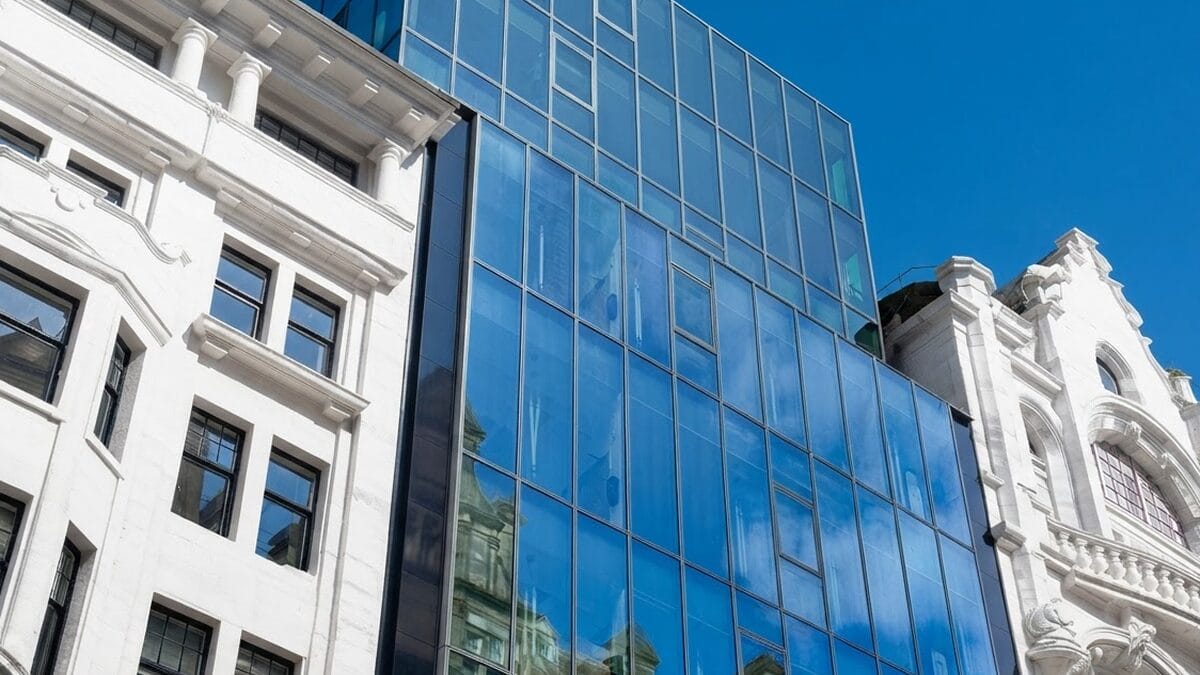
The Court reached a similar conclusion regarding replacement of the building façade. Although deterioration of the existing façade formed part of the background, the replacement works went well beyond simple maintenance or like-for-like substitution. The new façade improved the appearance, functionality and commercial attractiveness of the building and in the Court’s opinion the result was a materially different asset.
For owners considering major recladding or façade renewal projects, the decision reinforces the importance of focusing on the wider purpose and effect of the works, rather than simply identifying the individual components that involve replacement or repair.
What does this mean under a modern commercial lease?
The significance of Podium becomes particularly apparent when viewed alongside New Zealand’s standard form leases such as the current ADLS/TLANZ Deed of Lease.
The modern lease carefully distinguishes between ordinary maintenance and repair expenditure, which may be recoverable from tenants through outgoings, and expenditure associated with structural repairs, inherent defects, major upgrades, renewals and replacements, which generally remain the responsibility of the landlord.
The outgoings provisions permit recovery of many maintenance and repair costs, including routine building maintenance and service maintenance contracts. However, they expressly exclude structural repairs, repairs arising from design or construction defects, inherent defects, and the renewal or replacement of building services.
The tenant protections are equally significant. These leases generally provide that the tenant is not liable, either directly or through outgoings, for repairs to inherent defects or structural repairs, and that protection prevails over any inconsistent provision elsewhere in the lease.
Against that background, the Court’s focus in Podium on the overall outcome of a project rather than its individual components provides a useful framework for analysing many lease disputes.
When does maintenance become a landlord cost?
The practical question frequently encountered by landlords, tenants and property managers is whether a major building project can legitimately be characterised as maintenance and therefore recovered through outgoings. Podium suggests caution.
A landlord may be tempted to describe a project as maintenance because aspects of the work involve repairing deteriorated building components. However, where the completed project delivers a materially safer, stronger, more compliant, more functional or more valuable building, the project may be more accurately characterised as an upgrade, replacement or capital improvement.
This has particular implications for:
- major seismic strengthening programmes;
- remediation of latent or inherent defects;
- recladding projects;
- replacement of building services;
- substantial roof renewal projects; and
- significant compliance upgrades.
While each lease turns on its own wording, many of these projects may sit outside the categories of costs that are ordinarily recoverable from tenants under modern commercial leases.
Why leasing practitioners should pay attention
Although Podium is primarily a tax case, its practical significance extends well beyond tax law.
Many commercial lease disputes ultimately turn on whether works undertaken by the landlord constitute ordinary repair and maintenance, potentially recoverable from tenants as outgoings, or whether they are more properly characterised as structural work, remediation of inherent defects, replacement, renewal or capital improvement. The Court’s emphasis on substance over labels provides useful guidance when approaching those questions.
The decision also highlights an area where landlords often face risk. A project that appears to be made up of individual repair items may nevertheless be regarded, when viewed as a whole, as a capital programme that fundamentally improves the building. In those circumstances, both the tax consequences and the lease recovery position may be materially different from what was originally anticipated.
Why should councils care?
For local authorities, the implications of Podium extend beyond tax treatment. Councils are often substantial property owners and landlords or tenants in their own right. Many maintain extensive portfolios of civic buildings, community facilities, social housing, commercial properties and leasehold assets. At the same time, councils regularly undertake major programmes of seismic strengthening, remediation, recladding and compliance upgrades across those portfolios.
The distinction between repair and maintenance on the one hand, and capital improvement on the other, can therefore have significant financial consequences.
First, the decision may influence how councils approach budgeting and asset management. A project that appears to be a collection of repair items may ultimately be viewed as a broader programme that materially improves the asset, requiring different accounting and funding treatment.
Secondly, many councils act as landlords under commercial leases, community occupancy agreements and other forms of tenure. Where councils seek to recover expenditure from occupiers through outgoings or similar mechanisms, the reasoning in Podium reinforces the importance of looking at the overall outcome of the works rather than the individual items of expenditure.
Thirdly, councils are increasingly investing significant sums in resilience and compliance projects, particularly seismic strengthening. The Court’s observation here that strengthening work may fundamentally improve an asset, rather than merely restore it, is likely to resonate with asset managers and property teams throughout local government.
The practical lesson
The most valuable lesson from Podium is that labels matter less than outcomes. Courts will look beyond how parties describe a project and focus instead on what the project actually achieves.
For councils, landlords and tenants alike, that distinction has real consequences. Major strengthening works, defect remediation projects, recladding programmes and compliance upgrades may begin life as “maintenance” projects, but if they ultimately deliver a materially safer, stronger, more compliant or more valuable asset, they may be viewed as something quite different.
As local government around New Zealand continues to invest heavily in ageing infrastructure and property portfolios, Podium also provides an important reminder that the critical question is often not what work was undertaken, but why the work is being undertaken and what the work ultimately achieved.